Health and Safety Policy for Cleaners Richmond
 Our Health and Safety Policy sets out the standards that support safe, consistent, and responsible cleaning services in every setting. Whether carrying out routine maintenance or specialist tasks, cleaners in Richmond must follow clear procedures that reduce risk, protect wellbeing, and maintain a professional working environment. This policy applies to all staff, supervisors, and anyone carrying out cleaning duties on behalf of the business.
The purpose of this policy is to prevent accidents, control hazards, and promote a culture where safety is treated as a shared responsibility. Safe working practices are essential in every task, from dusting and mopping to handling chemicals and waste. All employees are expected to understand the risks linked to their role and work in a manner that protects themselves, clients, visitors, and property.
We recognise that cleaning work can involve slips, trips, manual handling, exposure to substances, and contact with contaminated materials. For that reason, our health and safety policy for cleaners is built around planning, training, supervision, and regular review. By applying these principles, we aim to keep cleaning operations efficient while maintaining the highest possible safety standards.
Risk assessment and safe working methods
Before any job begins, hazards must be identified and assessed. A suitable risk assessment should consider the surface being cleaned, the products in use, access conditions, ventilation, and the presence of other people. Cleaner health and safety depends on recognising risks early and taking reasonable steps to remove or reduce them. Where a task changes, the assessment should be updated to reflect the new conditions.
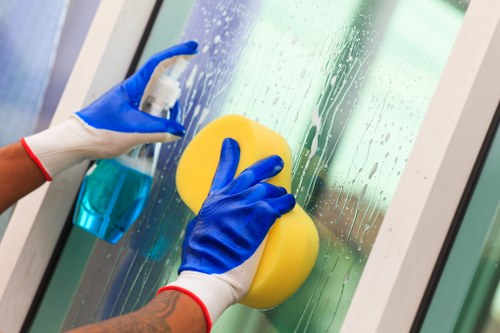 Staff must follow agreed safe working methods at all times. This includes placing warning signs where floors are wet, keeping walkways clear, and using equipment only for its intended purpose. A safe cleaning policy also requires workers to stop and report any hazard they cannot control. No task should be continued if it creates an unacceptable risk to the employee or others nearby.
Training, supervision, and competence
All cleaners must receive appropriate induction and ongoing training. This should cover safe use of equipment, correct handling of cleaning products, emergency procedures, manual handling techniques, and reporting processes. Supervisors are responsible for checking that staff understand their duties and can carry them out safely. Training must be refreshed whenever new equipment, substances, or methods are introduced.
Chemicals, equipment, and personal protection
Cleaning products must be stored, labelled, and used in line with manufacturer instructions. Staff should never mix products unless specifically permitted, as harmful reactions may occur. Where necessary, suitable personal protective equipment must be provided and worn, such as gloves, aprons, or eye protection. In a policy for cleaners, proper equipment use is not optional; it is a basic requirement for safe practice.
 Equipment must be inspected regularly and kept in good condition. Faulty machines, frayed cables, broken handles, or unstable tools should be removed from service immediately. Electrical safety is especially important when using vacuums, polishers, or any powered device. Staff should ensure hands are dry before touching electrical equipment and should not use damaged items under any circumstances.
Manual handling and workplace movement
Many cleaning tasks involve lifting, carrying, bending, or repetitive movement. To reduce the chance of strain or injury, staff should plan loads carefully, use mechanical aids where possible, and ask for help with heavy or awkward items. A good cleaners Richmond safety policy also requires attention to posture, pacing, and route planning so that movement around a site remains safe and efficient.
Floors, steps, cables, and obstacles are common causes of accidents. Cleaners must maintain awareness of their surroundings and keep their work area tidy. Spills should be dealt with quickly, and any area that presents a slip or trip hazard must be controlled until it is safe. Cleaning staff health and safety relies on simple habits carried out consistently throughout every shift.
Waste must be handled carefully, especially where sharp objects, body fluids, or contaminated materials may be present. Bags should not be overfilled, and waste streams should be separated where required. If sharp items are found, they should never be handled directly by hand. Instead, the correct tools and disposal methods must be used to prevent injury and contamination.
Emergency procedures, illness, and incident reporting
 In the event of an accident, spill, exposure, or fire alarm, staff must follow the correct emergency procedure immediately. First aid arrangements, evacuation routes, and reporting lines should be understood by all workers. Any injury, near miss, or unsafe condition must be recorded and reviewed so that lessons can be learned. A strong health and safety policy for cleaning teams depends on openness and prompt action after incidents.
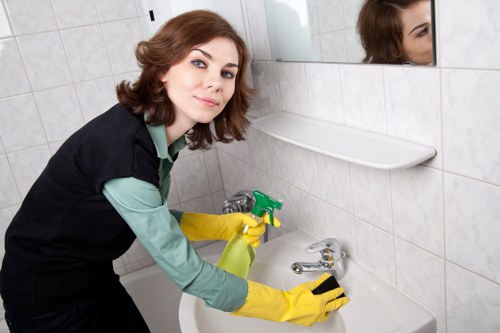 We also expect employees to work while fit and able to do so safely. If someone is unwell, fatigued, or affected by medication that may impair judgment, they should notify their supervisor before starting work. This protects the individual and helps prevent avoidable mistakes. Good cleaner safety practices include taking personal wellbeing seriously as part of daily decision-making.
Compliance with this policy is mandatory. Failure to follow safe procedures may lead to further training, supervision, or disciplinary action, depending on the seriousness of the issue. The policy will be reviewed regularly to ensure it remains effective, practical, and aligned with operational needs. By maintaining clear standards and encouraging safe behaviour, cleaners in Richmond can deliver reliable services while protecting health, safety, and professionalism at every stage.